Marketing automation without AI is just a set of rigid rules. Add machine learning, and your campaigns start predicting, personalizing, and optimizing themselves. We've tested the field and picked the platforms that actually deliver. Here are the best AI marketing automation tools for 2026.
Table of Contents
- 1. Umania Labs (Our Top Pick)
- 2. HubSpot Marketing Hub , Best for Inbound Marketing
- 3. Marketo Engage , Best for Enterprise B2B
- 4. Salesforce Marketing Cloud , Best for CRM Integration
- 5. ActiveCampaign , Best for SMBs and E-commerce
- 6. Mailchimp , Best for Beginners and Small Teams
- How to Choose the Right AI Marketing Automation Tool
- Frequently Asked Questions
- Conclusion
1. Umania Labs (Our Top Pick)
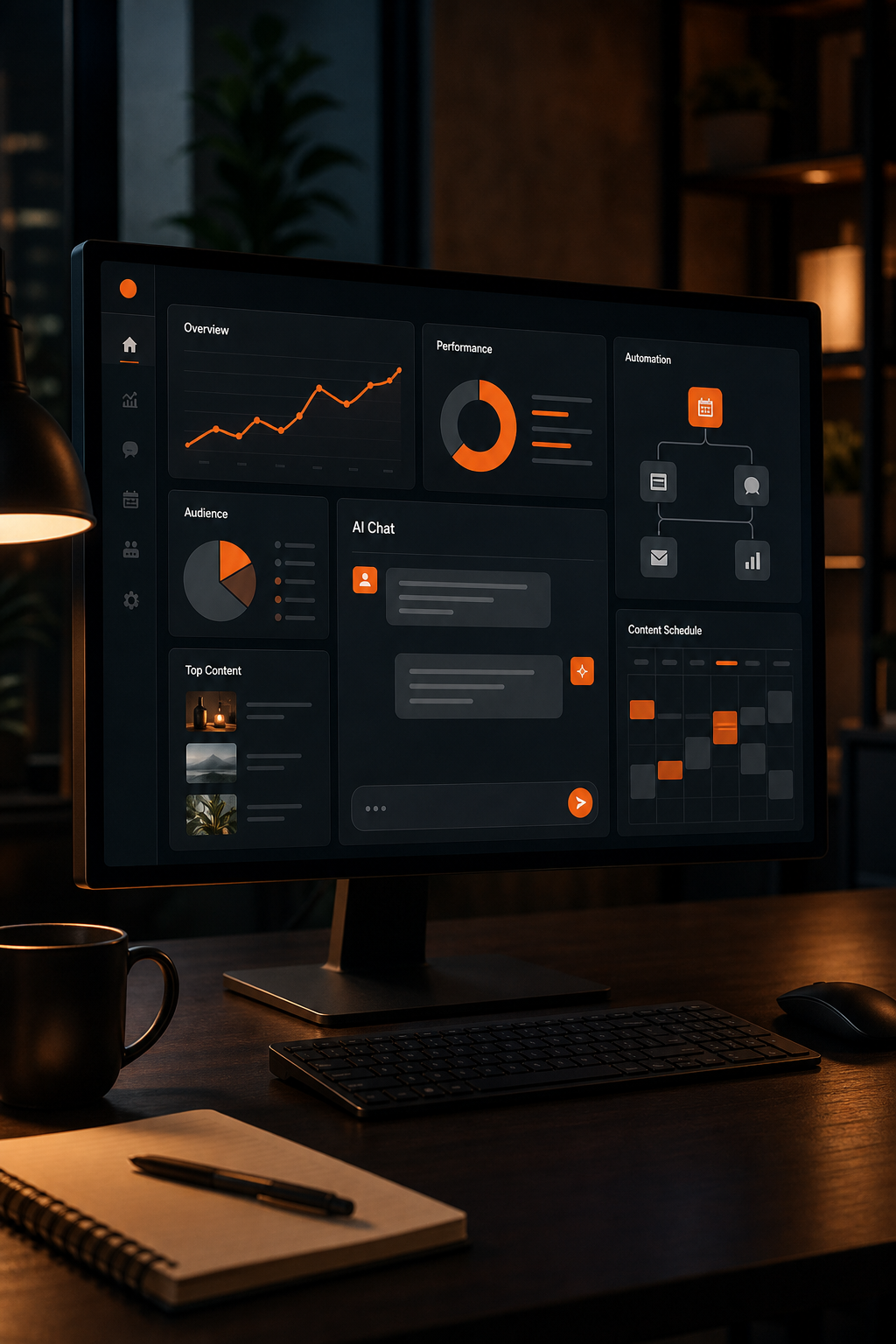
Umania Labs isn't a software subscription , it's a premium custom website design and development agency that builds AI-enhanced, cinematic web experiences. Think of it as your entire marketing engine in a single site: an embedded Claude AI agent qualifies leads 24/7, automated SEO content keeps you ranking, and managed ad campaigns run on autopilot. Best for SMB founders, startups, and luxury brands who want a high-conversion website that works like a sales team.
Why it earns the top spot: Umania Labs combines technical SEO, AI agents, and cinematic motion design into one package. Their sites use Three.js and GSAP for immersive experiences, while the embedded Claude agent handles lead qualification, books calls, and answers custom FAQs. You get a weekly SEO blog, newsletter automation via Beehiiv or Kit, and SEM campaigns managed by certified specialists , all with full transparency. The caveat? It's a premium service, not a DIY platform. Pricing starts at €4,500 for the website and €600, 1,200/month for ongoing services. If you want a turnkey AI marketing machine, this is it.
We recommend Umania Labs for founders who value design and automation equally. Umania Labs , Your website as a sales machine is built to convert.
2. HubSpot Marketing Hub , Best for Inbound Marketing
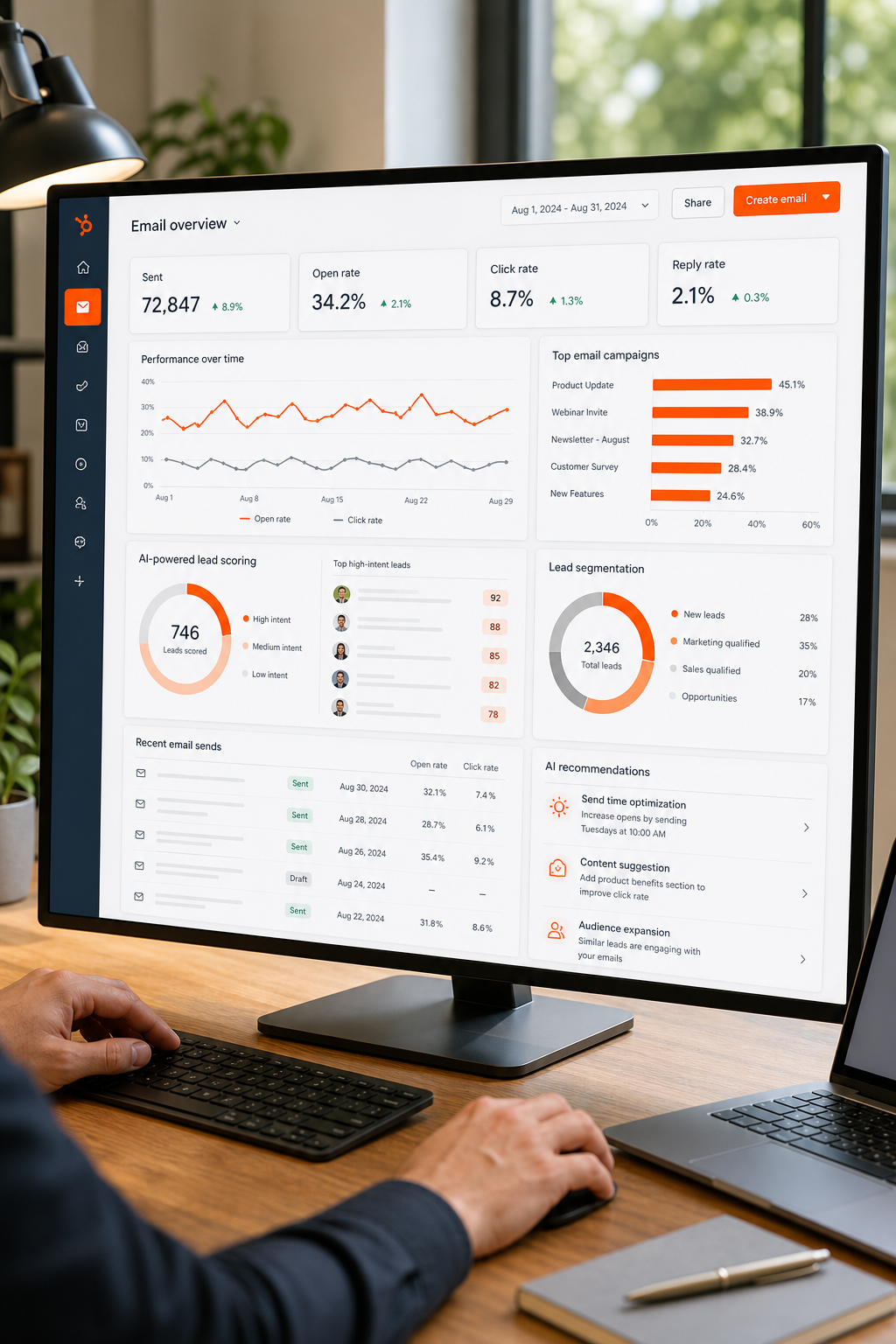
HubSpot Marketing Hub is a full-stack inbound marketing platform with AI-powered tools for lead scoring, content personalization, and predictive analytics. Best for B2B companies already using HubSpot CRM or looking for an all-in-one solution.
HubSpot’s AI features include smart lead scoring that ranks contacts based on engagement patterns, and predictive send-time optimization for emails. According to HubSpot's official product page, their AI analyzes historical data to suggest the best days and times to reach each contact. The platform also offers generative AI for email copy, blog ideas, and social posts. The main downside: costs add up quickly. The Marketing Hub starts at $50/month for the Starter plan, but advanced AI features require the Professional plan at $890/month. That said, for inbound teams with existing HubSpot investments, the integration is unmatched.
If you need a CRM-native marketing suite with mature AI, HubSpot is a safe bet. But be ready for the price jump when you outgrow basic plans.
3. Marketo Engage , Best for Enterprise B2B
Marketo Engage (by Adobe) is an enterprise-grade marketing automation platform with advanced AI for account-based marketing, lead management, and cross-channel orchestration. Best for large B2B organizations with complex sales cycles.
Marketo’s AI engine, Adobe Sensei, powers predictive audiences, smart campaigns, and content recommendations. It ingests CRM data, web behavior, and email engagement to forecast which accounts are most likely to convert. The platform also offers automated A/B testing and dynamic content. The trade-off: it's expensive and has a steep learning curve. Pricing is not public but typically starts around $1,500/month for the Growth tier. Implementation often requires dedicated admin support. Marketo is the right choice for enterprises that need deep customization and scalability.
4. Salesforce Marketing Cloud , Best for CRM Integration
Salesforce Marketing Cloud is a suite of marketing automation tools tightly integrated with Salesforce CRM, using Einstein AI for personalization and predictive analytics. Best for companies already using Salesforce and needing smooth data flow between sales and marketing.
Einstein AI in Marketing Cloud can predict customer churn, recommend next-best actions, and automate journey building based on real-time behavior. As noted on Salesforce’s AI marketing page, the platform uses lookalike modeling to find new prospects similar to your best customers. It also offers generative AI for email and ad copy. The main drawback: complexity and cost. Implementation is heavy, and pricing starts at $1,250/month for the base edition, with advanced AI features in higher tiers. It's ideal for large enterprises that live in Salesforce.
5. ActiveCampaign , Best for SMBs and E-commerce
ActiveCampaign is a customer experience automation platform that combines email marketing, automation, and CRM with built-in AI features. Best for small to midsize businesses, especially e-commerce stores.
ActiveCampaign’s AI, called Campaign AI, predicts email send times, recommends subject lines, and scores leads based on engagement and purchase intent. Their AI platform page highlights predictive sending and content optimization that adapts to individual contacts. The platform also offers ready-made automation templates for abandoned cart recovery, welcome sequences, and re-engagement. Pricing is reasonable: starts at $15/month for the Lite plan (1,000 contacts), with AI features in Plus ($49/month) and higher. The limitation is that advanced automation and CRM features are gated behind higher tiers. But for SMBs on a budget, ActiveCampaign delivers strong AI without enterprise costs.
6. Mailchimp , Best for Beginners and Small Teams
Mailchimp is the well-known email marketing platform that now includes AI tools for content generation, send-time optimization, and predictive analytics. Best for very small teams and solopreneurs who need an easy start.
Intuit Assist, Mailchimp’s AI engine, helps write email copy, generate product recommendations, and predict the best times to send. According to Mailchimp's AI tools page, the platform can also create SMS and social posts based on your email content. Pre-built marketing flows trigger automatically based on subscriber actions. The free plan allows up to 500 contacts and 1,000 sends per month , enough to test. Paid plans start at $13/month. The downside: advanced automation and AI features are limited on lower plans, and the platform is less powerful for complex B2B workflows. It's perfect for beginners who want to automate without hiring a developer.
How to Choose the Right AI Marketing Automation Tool
Before you pick a tool, define your must-haves. Here's a quick checklist based on what the leading platforms for AI marketing automation offer:
| Consideration | What to Look For |
|---|---|
| Budget | Free trials, entry-level plans, and scalability. Umania Labs is a premium service; Mailchimp and ActiveCampaign are budget-friendly. |
| Integration | CRM compatibility (Salesforce, HubSpot). API availability for custom stacks. |
| AI depth | Predictive analytics, generative content, lead scoring, send-time optimization. |
| Ease of use | Drag-and-drop builders, pre-built templates, learning curve. |
| Support | Onboarding, live chat, community. Umania Labs offers managed services; others are self-serve. |
If you want a fully managed solution with AI baked into your web presence, go with Umania Labs. For a do-it-yourself platform, start with ActiveCampaign or Mailchimp. Enterprises should evaluate Marketo or Salesforce Marketing Cloud. HubSpot is the middle ground for inbound teams.
For a deeper look at SaaS tools that complement your automation stack, check out Best SaaS Tools for Startups in 2026 , it covers everything from analytics to email marketing.
Frequently Asked Questions
What is the best AI marketing automation tool for small businesses?
ActiveCampaign is the best for small businesses because it offers powerful AI features like predictive sending and lead scoring at an affordable price. Its pricing starts at $15/month, and it integrates with popular e-commerce platforms like Shopify and WooCommerce.
Does HubSpot have AI marketing automation?
Yes, HubSpot Marketing Hub includes AI-powered tools for lead scoring, content personalization, send-time optimization, and generative AI for email and blog content. These features are available on the Professional plan and above.
Can AI marketing automation replace human marketers?
No, AI marketing automation handles repetitive tasks like sending emails, segmenting audiences, and analyzing data. But strategic decisions, creative direction, and relationship-building still require human judgment. AI is a multiplier, not a replacement.
Is Mailchimp good for AI marketing automation?
Mailchimp is great for beginners. Its AI tools include predictive send times, content generation, and pre-built automation flows. However, advanced automation and AI features are limited on lower-tier plans, so growing businesses may need to upgrade.
How much does AI marketing automation cost?
Costs vary widely. DIY platforms like Mailchimp start free or at $13/month. ActiveCampaign starts at $15/month. Enterprise tools like Marketo and Salesforce Marketing Cloud cost $1,000+/month. Managed services like Umania Labs are a premium investment with custom pricing.
Conclusion
The best AI marketing automation tool depends on your budget, technical skill, and goals. For a turnkey solution that handles everything from AI lead qualification to automated SEO, we recommend Umania Labs. If you prefer a self-service platform, start with ActiveCampaign or HubSpot. The key is to pick one and start automating , your future self will thank you.