Thinking about a new website but unsure how much it will really cost? In 2026 the price gap is huge, a DIY site can be free while a luxury agency project runs into six figures. Below is a step‑by‑step guide to size up your budget, pick the right build path, and avoid hidden fees.
Table of Contents
- Step 1: Define the Website Type and Scope
- Step 2: Separate One‑Time Build Costs from Ongoing Expenses
- Step 3: Choose a Website Build Approach
- Step 4: Budget for Design, SEO, Multilingual Features, and Conversion
- Step 5: Calculate the Three‑Year Budget and Compare Quotes
Step 1: Define the Website Type and Scope
The first thing you need to decide is what kind of site you’re after. A simple portfolio, a small‑business brochure, an e‑commerce shop, or a full‑blown SaaS platform each have a very different cost profile. Use the definition of “average” from the arithmetic mean to calculate a realistic range for your chosen type. The formula adds up all possible costs and divides by the number of options, a basic math trick you can run in any spreadsheet.Learn how the average works.
Ask yourself: how many pages will you need? Will you need a booking engine, a product catalog, or a multilingual framework? Sketch a quick sitemap on paper or in a digital tool. The clearer the scope, the easier it is to compare quotes later.
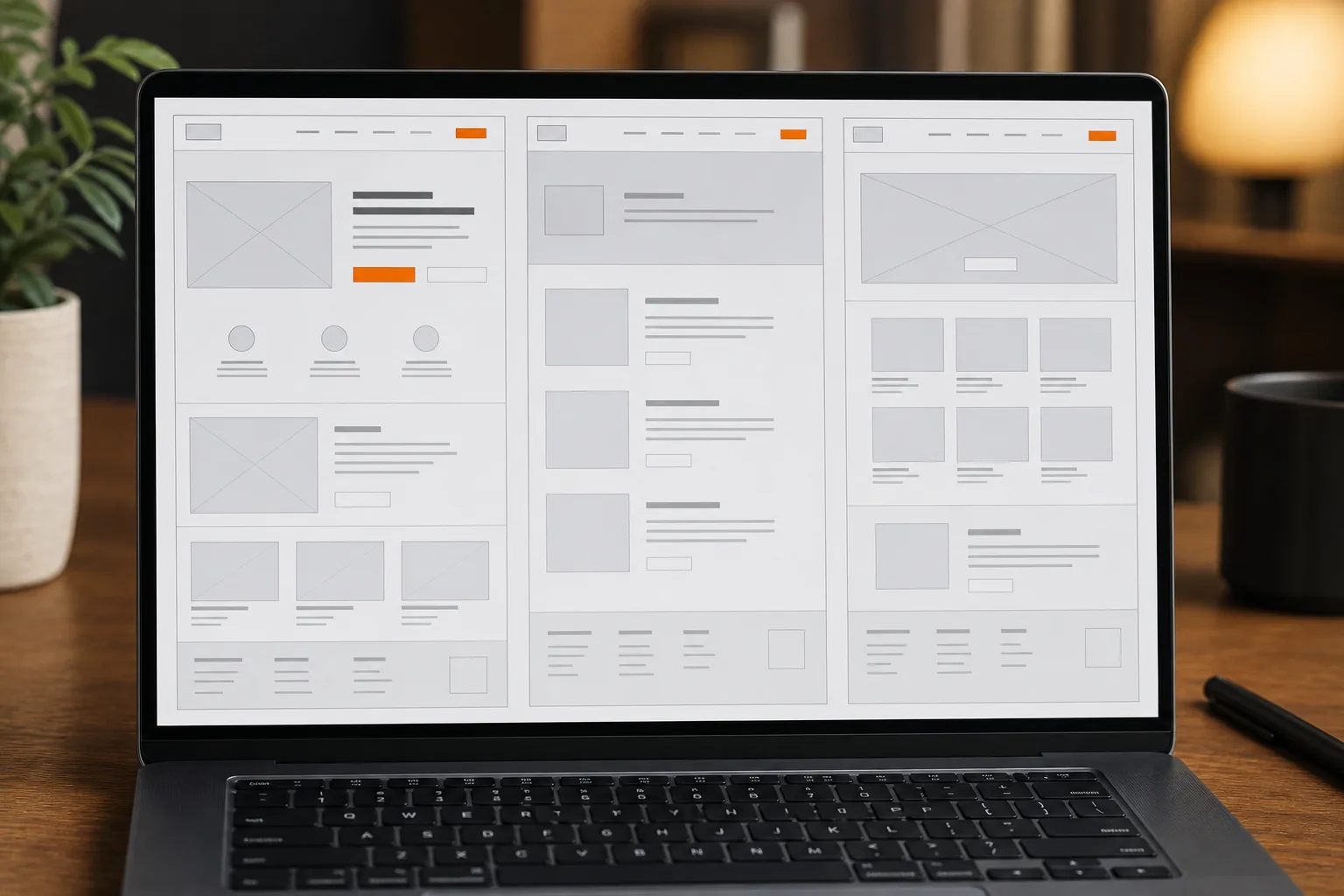
Umania Labs often starts with a scope workshop for luxury real‑estate or yacht charter clients. That upfront work saves money because the design and development teams know exactly what to build.
Step 2: Separate One‑Time Build Costs from Ongoing Expenses
Website budgets have two parts. The one‑time build cost covers design, development, copy, and launch. Ongoing expenses include hosting, domain renewal, security updates, and SEO maintenance. Treat them as separate line items so you don’t surprise yourself later.
Typical one‑time ranges (from recent market data) look like this:
- Portfolio or personal site: $300 , $1,500
- Small business site: $1,000 , $5,000
- eCommerce store: $3,000 , $20,000+
- SaaS web app: $10,000 , $100,000+
Ongoing costs vary by hosting choice and support level. A shared host may be $5‑$25 per month, while a dedicated cloud solution can exceed $200 per month. Add a retainer for SEO or security updates, $1,000‑$3,000 per year is common for premium sites.
For a deeper dive on budgeting, on how much a website really costs in 2026. It walks through typical line items and hidden fees.
Step 3: Choose a Website Build Approach
Now pick how you’ll get the site built. Your main options are DIY builders, freelancers, boutique agencies, or premium luxury studios like Umania Labs. Each path trades cost for control, speed, and long‑term performance.
DIY platforms (Wix, Squarespace) start at $0‑$30 per month. They’re fast but limited in custom code and SEO depth. Freelancers can deliver a custom WordPress site, but quality varies.
Mid‑tier boutique agencies charge $5,000‑$20,000 for a full custom design and technical SEO setup. They usually include a project manager, copywriter, and a few rounds of revisions.
Luxury agencies such as Umania Labs operate at the high end. They blend Awwwards‑level visual design, AI lead qualification, and multilingual architecture into a single package. Pricing isn’t listed publicly because each project is bespoke.
When you compare quotes, ask each provider for a detailed scope, timeline, and post‑launch support plan. That way you can stack up the total cost of ownership, not just the headline price.
Step 4: Budget for Design, SEO, Multilingual Features, and Conversion
Design, SEO, language support, and conversion tools are the big cost drivers beyond the basic build. Allocate separate buckets for each so you can see where the money goes.
Design: High‑end visual work can run $5,000‑$30,000 depending on the number of custom animations, 3D renders, and brand‑specific photography. Umania Labs, for example, uses advanced animation tools to craft cinematic scroll effects that keep visitors engaged.
SEO: Technical SEO setup, schema, Core Web Vitals, and multilingual hreflang tags, often adds $2,000‑$5,000. Ongoing SEO retainers can be $1,000‑$3,000 per month for link building and content creation.
Multilingual: If you need the site in English, Spanish, French, and German, plan $3,000‑$8,000 for translation workflow, localized SEO, and language switcher development.
Conversion: AI lead qualification agents cost rates available on request to integrate, plus a monthly usage fee. These bots can filter high‑net‑worth leads before they reach your sales team.

For a quick look at design cost options, read our best website design cost guide for 2026. It breaks down template, semi‑custom, and full‑custom price bands.
Step 5: Calculate the Three‑Year Budget and Compare Quotes
Most buyers only look at the upfront price, but the real picture emerges over three years. Add together build cost, annual hosting, domain renewal, security patches, SEO retainers, and any AI service fees.
Here’s a simple worksheet you can copy into a spreadsheet:
Year 1: Build $X + Hosting $Y + Domain $Z + SEO $A + AI $B = Total Year 1
Year 2: Hosting $Y + Domain $Z + SEO $A + AI $B = Total Year 2
Year 3: Hosting $Y + Domain $Z + SEO $A + AI $B = Total Year 3
Three‑Year Cost = Sum of Years 1‑3
Plug in the ranges from the market data. For a mid‑range eCommerce site, you might see a build cost of $12,000, hosting $150/month, SEO $2,000/year, and AI $1,500/year. That totals roughly $28,000 over three years.
When you have numbers for each vendor, line them up in a table and look for outliers. A quote that’s dramatically lower may be missing critical features like security hardening or multilingual support.
Finally, reach out to the shortlist of providers and request a detailed proposal. Use our custom‑design worth‑it guide to ask the right questions about deliverables, timelines, and post‑launch support.
FAQ: Average Cost of a Website
What is the typical price range for a small business website in 2026?
Small business sites usually fall between $1,000 and $5,000 for a custom design and basic SEO. That range covers a five‑page site built on WordPress or a similar platform.
How much does a high‑end luxury agency charge for a website?
Luxury agencies like Umania Labs often charge tens of thousands, because they deliver cinematic visuals, AI lead qualification, and multilingual architecture that go far beyond a standard build.
Are there hidden costs I should watch for?
Yes. Hidden costs include ongoing SEO retainers, security patches, content updates, and third‑party integrations such as payment gateways or CRM connections. Factor these into your three‑year budget.
Can I build a professional site myself for under $500?
You can launch a basic site using free templates on DIY platforms, but you’ll miss custom branding, advanced SEO, and conversion tools that drive sales for luxury brands.
How can quotes be compared without getting overwhelmed?
Use a spreadsheet to break down each quote into build cost, hosting, domain, SEO, and AI fees. Then calculate the total three‑year cost. The lowest total cost that meets all your feature requirements is the best value.
Choosing the right budget approach saves you money and ensures your site performs as a revenue driver. Start with a clear scope, split one‑time and ongoing costs, pick the build path that matches your brand ambition, and run the numbers over three years.
Ready to see a premium website that actually converts? Contact Umania Labs for a no‑fluff proposal tailored to your luxury market.