Some real estate websites feel alive. New homes appear fast, search feels easy, and the next step is clear. Others show stale listings and leave visitors guessing. We’ll break down the features that separate the best real estate websites from polished brochure sites, then show how to build one that attracts and qualifies serious buyers.
Table of Contents
- Umania Labs
- Step 1: Make Property Listings Accurate, Fresh, and Searchable
- Step 2: Turn Website Visits Into Qualified Buyer and Seller Leads
- Step 3: Build Authority With Local Content and Trust Signals
- Step 4: Choose a Mobile-First Platform You Own and Can Grow
- FAQ
1. Umania Labs
Umania Labs is a premium web design and development studio for luxury real estate and villa agencies. Based in Mallorca, the team builds cinematic websites for firms that sell to international buyers and high-net-worth clients.
Our approach starts with conversion architecture. That means each page has a job. A property page should help a buyer understand the home, picture the setting, and take the next step. A market page should attract search traffic. A contact flow should tell the team whether the visitor wants to buy, sell, invest, or book a viewing.
Umania Labs combines Awwwards-level visual design with technical SEO. We also build multilingual site structures for agencies that work across Spain and international markets. Built-in AI lead qualification can sort early questions before a human steps in, which helps a small team focus on leads with clear intent.
That mix matters because most property portals focus on discovery. The same sample had no reported API or third-party integration options, so agents should ask hard questions before choosing a closed system.
For a closer look at the design decisions behind luxury property sites, explore our guide to real estate agent website design options. If your listings need a stronger digital home, we’re happy to discuss the brief with no pitch and no pressure.
Step 1: Make Property Listings Accurate, Fresh, and Searchable
The best real estate websites begin with reliable listing data. Before you worry about animation or brand color, make sure a buyer can trust what appears on the screen.
An approved listing-data feed is the public display layer that lets an approved real estate website show listings from a local MLS. The MLS stores listing data. An approved listing-data provider passes the permitted data to your site. Buyers can then search homes without leaving your brand.
A typical feed can update prices, listing status, photos, beds, baths, location, and other fields allowed by the MLS. Modern feeds often refresh every 15 minutes or less, though the exact timing depends on the provider and local rules. A home that changed from active to pending should not remain active on your site for days.
MLS access and public listing search are different. An agent uses MLS access behind the scenes for work such as listing management and market analysis. Public listing search is the public search tool. You need the first to run the business and the second to turn your website into a useful market resource.
The data usually starts in the MLS, moves through an approved vendor, and reaches the agent’s website under display rules. Ask your MLS and approved listing-data provider about approval, refresh speed, field limits, compliance, and support before signing a contract.
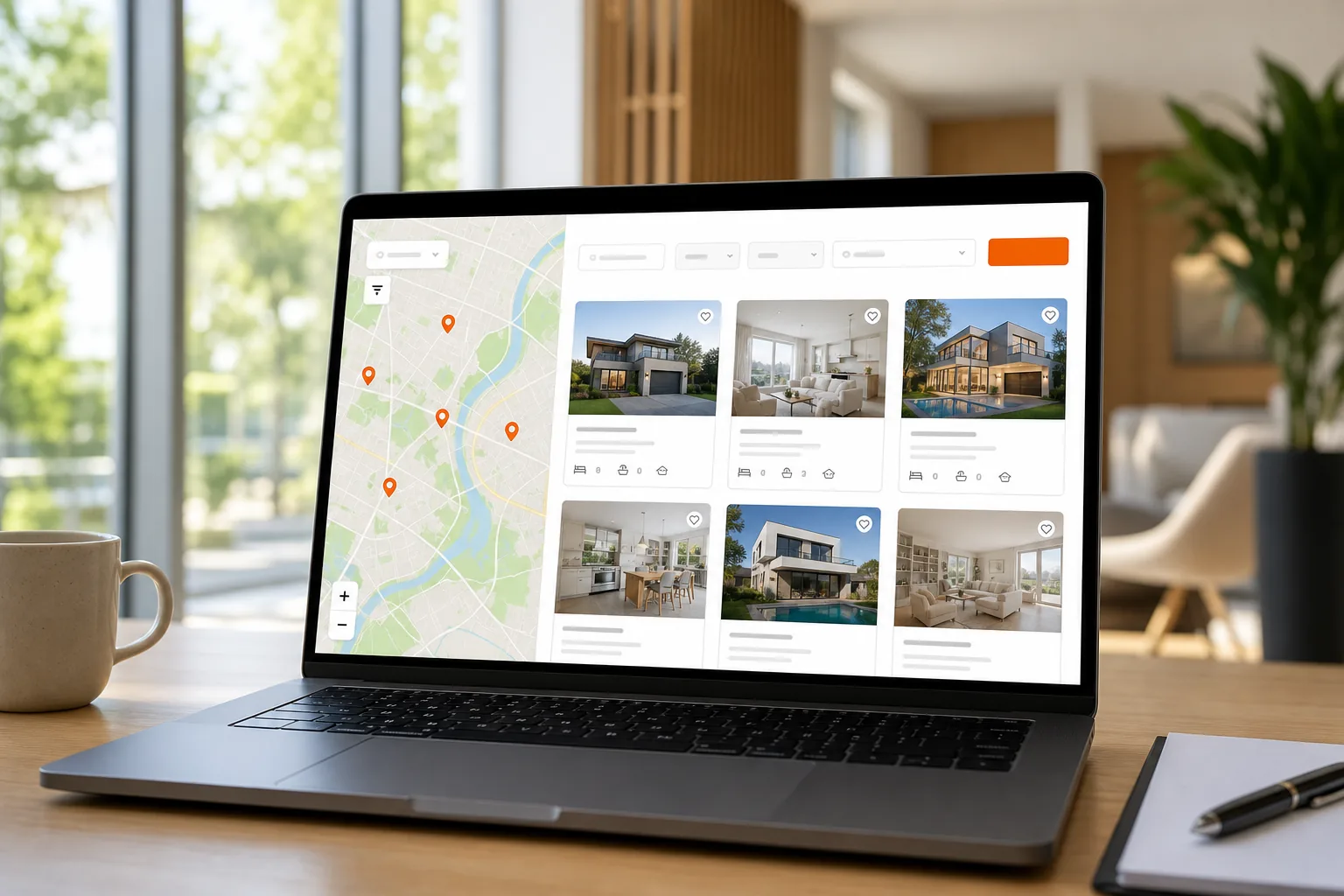
Search also needs structure. Give visitors filters for price, area, property type, and key features. Add map search when location drives the decision. Let users save searches or request alerts if your system supports it. Build indexable property and community pages where the feed and MLS rules allow it.
For sellers, accuracy protects trust. For buyers, it protects time. If the feed cannot keep pace with status changes, a beautiful site still fails its first test.
Step 2: Turn Website Visits Into Qualified Buyer and Seller Leads
Traffic has little value if nobody raises a hand. The best real estate websites give visitors a clear reason to share details, then route each lead to the right follow-up.
Start with one conversion goal per page. A buyer page might ask someone to save a search or request a private viewing. A seller page might invite a valuation request. A luxury property page might use a discreet inquiry form that asks about timing, budget, and preferred contact method.
Use landing pages for paid campaigns. If an ad promises a guide to waterfront villas, the click should reach a page about waterfront villas. Sending that visitor to a generic homepage adds friction and makes the ad harder to measure.
Keep forms short at first. Ask for the information your team will act on. A long form can scare away early-stage visitors, while a form with only an email address gives the sales team little context. A useful middle path is progressive capture. Ask one or two questions first, then gather more detail after the visitor requests a report or viewing.
Place contact paths across the site. A buyer may want to send a message from a property page. A seller may need a valuation link from a service page. Add a visible form or action near the point where intent appears, rather than forcing every visitor to find a contact page.
Then connect the form to a CRM. Set a source field for organic search, paid ads, referral traffic, or a property page. Add a lead stage. Assign an owner. Trigger a useful email after submission, but keep the message tied to the person’s request.
An AI agent can help with first questions, especially outside office hours. It should explain what it can do, collect basic needs, and hand off clearly. It should not pretend to be a human or promise availability that the team cannot provide.
Buyers also need trust before they submit personal details. A clear privacy notice and a plain explanation of the next step reduce doubt. A helpful companion resource is this guide to questions to ask a real estate agent, which reflects the kind of decision help buyers seek before they commit.
Measure the full path. Watch form completion, qualified lead rate, response time, and booked viewings. A page with fewer inquiries may still be stronger if those inquiries show clear intent.
Step 3: Build Authority With Local Content and Trust Signals
The best real estate websites earn attention with local knowledge. A listing feed can show what is available today, but useful local content gives buyers a reason to return.
Build one strong page for each area you truly serve. Cover the feel of the area, transport, nearby services, property types, and the questions buyers ask before booking a visit. Keep the facts current. If you mention schools, rules, transport, or amenities, set a review date for the page.
Neighborhood pages can target specific searches that broad property portals may not answer well. Think about phrases tied to an area, property type, and buyer need. A buyer may search for a villa near a beach, a flat close to a town center, or a home with space for remote work.
Use a blog to answer questions at each stage. Early readers may need a guide to buying in a new country. Later readers may want help with taxes, viewings, renovation, or selling preparation. Write for one clear reader at a time. Generic market posts rarely build a strong point of view.
School information can help families, but present it with care. Link to current official information where possible. Do not imply that a school guarantees a child’s outcome. Keep the page useful without turning it into a sales claim.
Trust signals belong close to the decision point. Add verified reviews, client testimonials with permission, team details, professional credentials, and a clear service area. A review beside a property inquiry form can do more work than a review hidden on a separate page.
Visual content helps when it adds information. A short video can show a home’s flow, the route to a nearby area, or the view at different times of day. Do not use video to hide weak copy or slow the page.
Luxury buyers also care about the life around a property. Developers can explain features such as shared gardens or outdoor fitness zones, including ideas from outdoor sports equipment and urban furniture when those amenities fit the project. The point is simple: sell the setting with the same care as the floor plan.
Umania Labs builds this content into the site structure instead of adding it as an afterthought. We plan the page system first, then shape the words, visuals, and calls to action around it.
Step 4: Choose a Mobile-First Platform You Own and Can Grow
The best real estate websites work first on a phone. Many buyers discover a property through a search result or shared link, then decide within seconds whether the page feels usable.
Test the site on a real phone, not only in a desktop preview. Check the first image, menu, map, filters, form, and page speed. Make sure text remains easy to read over images. Keep the main action within reach without covering the listing details.
Choose the platform based on control, not the demo alone. A hosted builder may reduce setup work, while WordPress can give a team more control over content and extensions. A custom build may fit a luxury brand that needs unusual motion, multilingual structure, or a tailored inquiry flow.
Ask who owns the domain, design files, written content, photos, data, and analytics account. Ask what happens if you leave. Some content plans or hosted systems may tie access to the provider. Losing years of local content during a platform move can hurt more than a large redesign bill.
Check the technical basics before approving the visual layer:
- Can the listing provider connect through an approved MLS feed?
- Can the team edit titles, descriptions, URLs, and internal links?
- Does the site support multilingual page paths and metadata?
- Can forms send clean data into the CRM?
- Can staff export leads and content if the relationship ends?
- Can developers work with the site without breaking the listing feed?
Design tools can control motion and create interactive 3D scenes. Use them with restraint. A moving hero may suit a villa brand, but the property facts and inquiry path must stay fast and clear.
Technical SEO also needs a plan. Set one main topic per page. Use descriptive headings. Add image text for accessibility. Remove duplicate listing URLs where possible. Review indexation in search tools instead of assuming every generated page helps.
Platform cost is only one part of the decision. Content ownership, feed maintenance, development access, and future migration can shape the true cost. Our explainer on website costs and pricing drivers covers the questions worth asking before you set a budget.

FAQ
What makes the best real estate websites?
The best real estate websites combine fresh listing data with a clear path to contact an agent. They usually include IDX search, useful property pages, local content, trust signals, and mobile-first design. The strongest sites also connect forms to a CRM, so inquiries do not sit in an inbox without an owner.
How often should real estate listings update?
Real estate listings should update as close to the MLS source as the approved feed allows. Many modern IDX feeds refresh every 15 minutes or less, but timing varies by provider and market. Ask about status changes, price updates, feed outages, and the process for fixing a listing that appears wrong.
Do real estate agents need IDX on their website?
Most agents need IDX if they want visitors to search more than the agent’s own listings. IDX displays permitted MLS data on the public site, while MLS access remains the agent’s private business tool. The right setup can support search traffic and lead capture, but local MLS rules still control eligibility.
What lead capture tools should a real estate website have?
A strong site should give visitors several sensible ways to make contact. Useful options include saved-search requests, valuation forms, viewing requests, property inquiries, and focused landing pages. Send each lead to a CRM with its source and request type, then set a clear follow-up task for a team member.
Is WordPress good for a real estate website?
WordPress can work well for a real estate website when the team has control of content, hosting, security, and IDX integration. It supports flexible page structures and local SEO work, but it still needs upkeep. A hosted or custom system may be a better fit when the team needs managed support or a highly tailored buying flow.
How do real estate websites get found on Google?
Real estate websites gain search visibility by publishing useful local pages, keeping technical structure clean, and giving search engines crawlable content. IDX can add property pages, but those pages should not replace original neighborhood guides or expert advice. Focus each page on a real buyer question and keep the information current.
Our recommendation is to start with the data feed and conversion path, then shape the visual system around them. If you want a premium site that joins cinematic design with technical SEO and AI lead qualification, share your current site and goals with Umania Labs for a focused first conversation.