Building a hospitality website that feels like a boutique hotel lobby while actually driving bookings is a tough mix. Below you’ll find the exact steps we use at Umania Labs to turn a static brochure into a 24/7 sales engine.
Table of Contents
- Step 1: Define Your Hospitality Website Goals and Guest Journeys
- Step 2: Build the Right Information Architecture for Guests
- Step 3: Design a Visual Experience That Sells the Stay
- Step 4: Create Booking, Inquiry, and Conversion Paths
- Step 5: Add Technical SEO, Multilingual Support, and AI Lead Qualification
- FAQ
Step 1: Define Your Hospitality Website Goals and Guest Journeys
Start with the outcomes you need: direct bookings, qualified inquiries, or brand awareness. Write each goal on a sticky note and rank them by revenue impact. When a luxury boutique hotel wants to cut OTA commissions, direct booking becomes the top goal.
Next, map the guest journey from first impression to post‑stay follow‑up. Sketch a simple flow: Awareness → Exploration → Decision → Booking → Confirmation → Loyalty. Each stage should have a clear call‑to‑action that matches the goal you set.
Umania Labs helps you set these goals with a workshop that pulls data from your property management system and your past booking reports. The result is a goal sheet that links every page to a conversion metric.
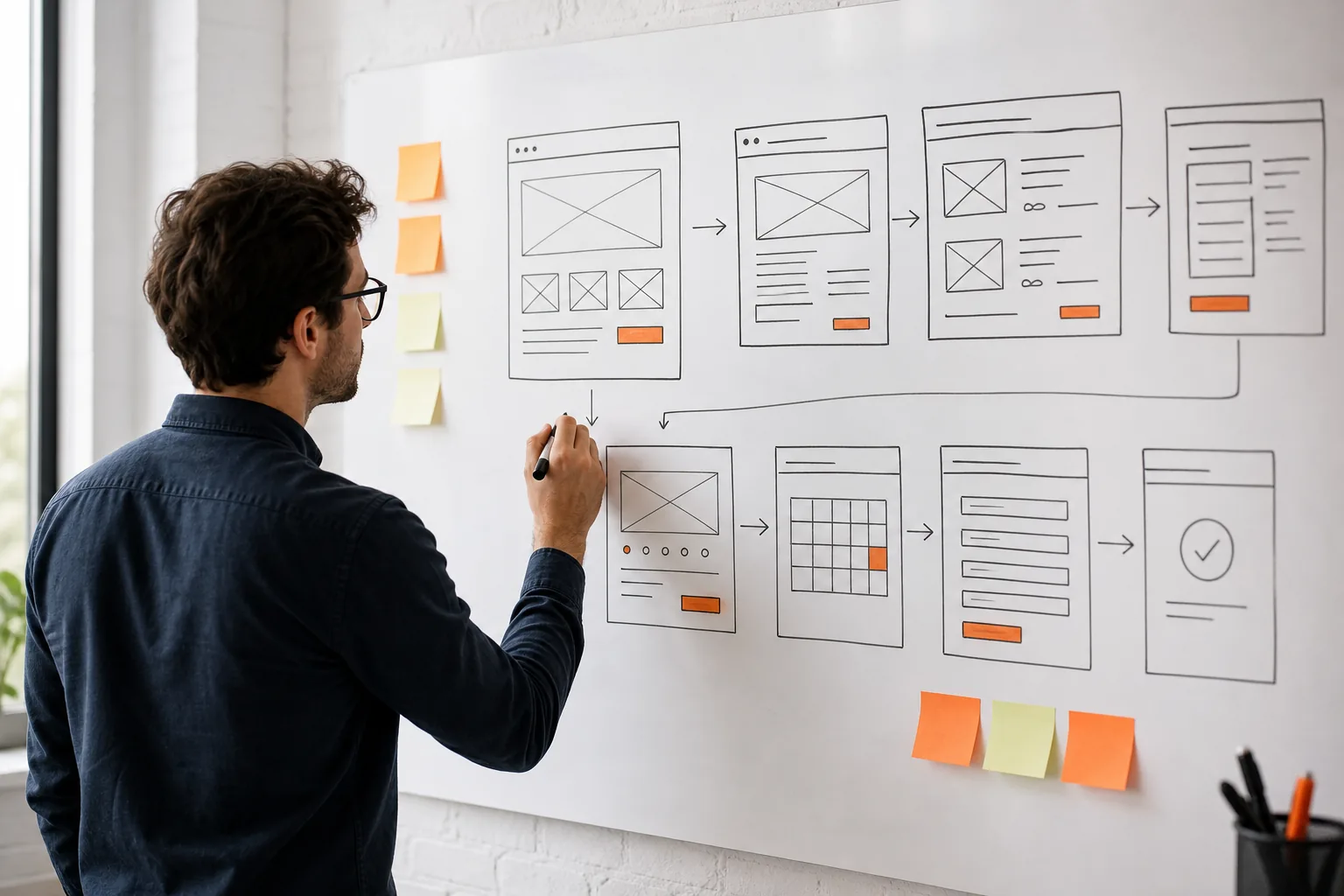
Bottom line: define measurable goals first, then build every page to serve them.
Step 2: Build the Right Information Architecture for Guests
Information architecture (IA) is the site’s backbone. It decides how easily a traveler finds a room, a spa package, or a dining menu. Start with a shallow hierarchy: a top‑level navigation that lists the most common guest intents, Rooms, Experiences, Dining, and Contact.
Use card‑sorting workshops with real guests to validate the labels. If a guest can’t find the “All‑Inclusive Packages” link in under three clicks, the IA needs tightening.
When the IA is solid, you can add machine‑readable structured data for hotels, rooms, and events. Search engines read that data and can show rich results in Google’s travel carousel.
Technical tip: a relational database works well for the kind of structured data hotels need. It guarantees transaction safety for bookings and makes it easy to join room‑type tables with pricing tables. Wikipedia explains why relational databases are a safe choice for reservation systems.
For a deeper look at IA best practices, see our Top 10 Hospitality Web Design Agencies for Luxury Brands guide.
Takeaway: a clear IA reduces bounce, improves SEO, and speeds up the booking funnel.
Step 3: Design a Visual Experience That Sells the Stay
First impressions live in the hero image. Use full‑bleed, high‑resolution photos taken by a professional photographer who knows how to capture light in a Mediterranean villa or a yacht deck. Stock images feel generic and hurt credibility.
Second, keep the design mobile‑first. Test on a 5G phone; the hero should load under 1 second. Lazy‑load background videos and serve modern image formats to keep the weight low.
Third, embed a clear “Check Availability” button in the sticky header. It should stay visible as the user scrolls, and it should repeat on each room detail page.
Core Web Vitals are a confirmed ranking factor for hospitality sites. Use performance guidance to audit LCP, CLS, and FID.
Umania Labs adds subtle motion to give the site a cinematic feel without slowing it down. The result is an Awwwards‑level visual that still scores high on performance.
Pro Tip: pair each visual with a short, emotive caption that answers a guest question (“What can I do at the pool?”). It bridges the gap between art and utility.
Step 4: Create Booking, Inquiry, and Conversion Paths
Booking paths must be frictionless. Place a primary “Book Now” button on every room page and a secondary “Contact Us” link for high‑value guests who need a custom package.
Use a single‑page reservation flow that captures dates, guests, and payment info before any redirects. Avoid multi‑step wizards unless you’re selling complex experiences.
Integrate directly with your PMS via API so availability updates in real time. If you use a third‑party engine, sync it with a calendar to prevent double‑booking.
Each path should end with a thank‑you page that includes a clear next step, like “Add to Calendar” or “Download your itinerary.”
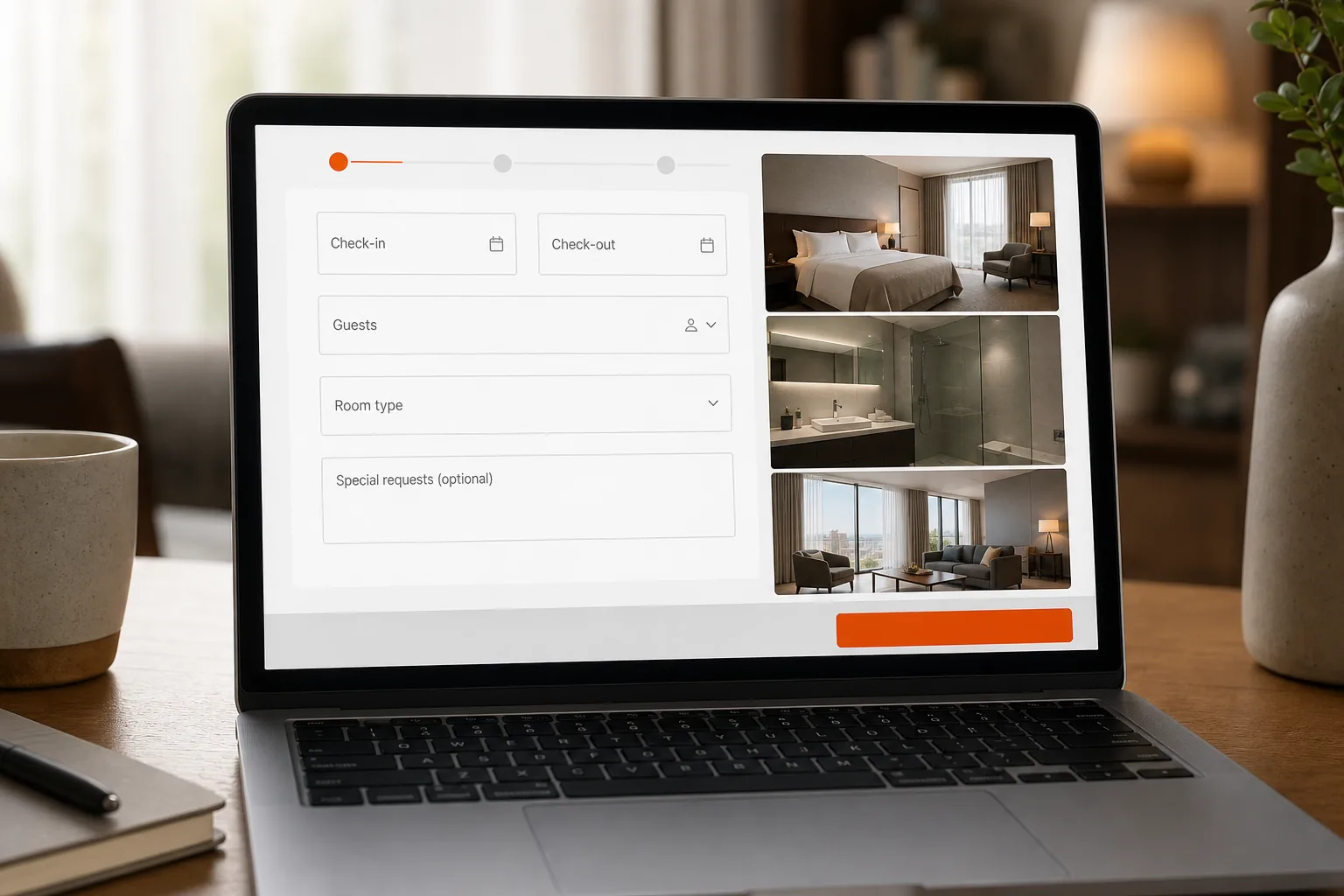
We also set up conversion boosters, countdown timers for limited‑time offers, and urgency badges that show how many rooms remain.
For a step‑by‑step walkthrough of how to plan the redesign that includes these paths, read How to Plan a Hotel Website Redesign.
Key takeaway: a clear, single‑page booking flow plus a well‑placed fallback keeps the conversion rate high.
Step 5: Add Technical SEO, Multilingual Support, and AI Lead Qualification
Technical SEO starts with clean, semantic HTML. Use proper heading order, descriptive alt tags, and structured data for each room type. Google’s crawler reads this structure and can surface your pages in the travel carousel.
Multilingual support is a must for luxury brands that attract international guests. Build language folders (e.g., /en/, /es/, /de/) and serve the correct version via hreflang tags. This tells search engines which language to show to which user.
Umania Labs bundles a Claude‑based AI agent that greets visitors, answers common questions, and qualifies leads before they reach your inbox. The AI tags each lead with intent signals (e.g., “high‑value suite request”) so your sales team can prioritize.
Half of hospitality agencies still lack AI‑driven lead capture, which means they miss out on quick follow‑ups. Our AI qualification lifts the conversion chance by up to 30% on qualified leads.
Finally, set up a performance dashboard that tracks Core Web Vitals, organic traffic, and conversion rates. Use the data to iterate on copy, images, and pricing.
Multilingual best practices can help international guests navigate content; learn more for background.
Bottom line: blend SEO, language, and AI to turn traffic into high‑value bookings.
FAQ
What is the first thing I should do when starting a hospitality website?
Define clear conversion goals and map the guest journey before any design work begins. That gives every page a purpose and makes measurement easy.
How many pages should a boutique hotel site have?
Focus on the essentials: Home, Rooms, Experiences, Dining, Gallery, Blog, and Contact. Adding more pages dilutes SEO focus and can confuse guests.
Do I need a custom website or can I use a template?
A custom site lets you integrate your PMS, multilingual SEO, and AI lead qualification in a way a template cannot. For luxury brands, the extra control usually pays off in higher direct bookings.
How important are Core Web Vitals for hospitality sites?
Very important. Google uses them as a ranking signal, and slow pages cause guests to abandon the booking flow. Aim for LCP under 2.5 seconds and CLS below 0.1.
Can AI really qualify leads for a hotel?
Yes. An AI agent can ask qualifying questions, capture intent, and tag leads for priority follow‑up, reducing manual triage and improving response time.
We recommend starting with the step‑by‑step process above and letting a specialist handle the technical layers. If you’re ready to see a cinematic, high‑conversion site built for luxury hospitality, reach out to Umania Labs for a free consultation.
| Path | Primary Action | Fallback |
|---|---|---|
| Direct Booking | Instant payment form | Phone callback request |
| Inquiry Form | Qualified lead capture | Automated email reply |
| Special Packages | Custom quote request | Live chat handoff |