A luxury website can look like a film and still lose the sale. The strongest modern website design pairs visual drama with clear offers, fast pages, search-ready code, and lead handling that works after hours. We use the process below to build sites that feel premium while giving visitors a clear next move.
Table of Contents
- Step 1: Define the Audience, Offer, and Conversion Goal
- Step 2: Build a Premium Visual System Without Sacrificing Usability
- Step 3: Design Responsive, Accessible, and Fast User Experiences
- Step 4: Structure the Site for SEO, Multilingual Search, and Discovery
- Step 5: Add Lead Qualification, Test the Journey, and Launch
- FAQ
- Conclusion
Step 1: Define the Audience, Offer, and Conversion Goal
Modern website design starts with a business decision, not a color palette. Before we sketch a page, we define who should act, what they should buy, and what counts as a useful lead.
The word modern means using recent ideas or methods. For a luxury website, that means more than large type and motion. The site must match how high-value buyers make choices.
Write one audience statement first. For example: “International buyers looking for a Mallorca villa with discreet expert help.” Keep it narrow. A property investor, a yacht charter guest, and a hotel visitor may all have high budgets, but they need different proof and different paths.
Next, write the offer in plain words. Avoid “bespoke lifestyle solutions.” Say what the visitor gets. That might be a private viewing, a charter plan, a room booking request, or a table reservation.
Then choose one primary conversion goal. It could be a qualified inquiry. A secondary goal might be a brochure request or a message to an advisor. If every button says something different, visitors hesitate. One clear action gives the page a spine.
Map the first five questions a buyer will ask:
- Is this for someone like me?
- Can I trust the business?
- What makes the offer worth my time?
- What happens after I submit a request?
- Can I get help in my language?
Put answers near the points where doubt appears. A villa page needs location and fit early. A boutique hotel needs room details and booking direction. A yacht page needs route, timing, and guest fit before a long brand story.
We also set a baseline before design work begins. Track qualified inquiries, form completion, key page visits, and the share of leads that match the service. That lets us judge the site by business output, not applause from a design gallery.
By now you should have a short audience brief, a one-sentence offer, and a conversion map. If you need to review the wider business case first, our website cost explainer helps frame scope before production starts.
Step 2: Build a Premium Visual System Without Sacrificing Usability
Good modern website design uses style to guide attention. It does not make visitors work to find the next step.
Start with a visual system. Pick one type family for display text and one for body copy. Set a small scale for headings, labels, and paragraphs. Choose a dark base or a light base, then add one sharp accent. Umania Labs often uses high contrast and a warm orange accent, #FF6B00, when it fits the brand.
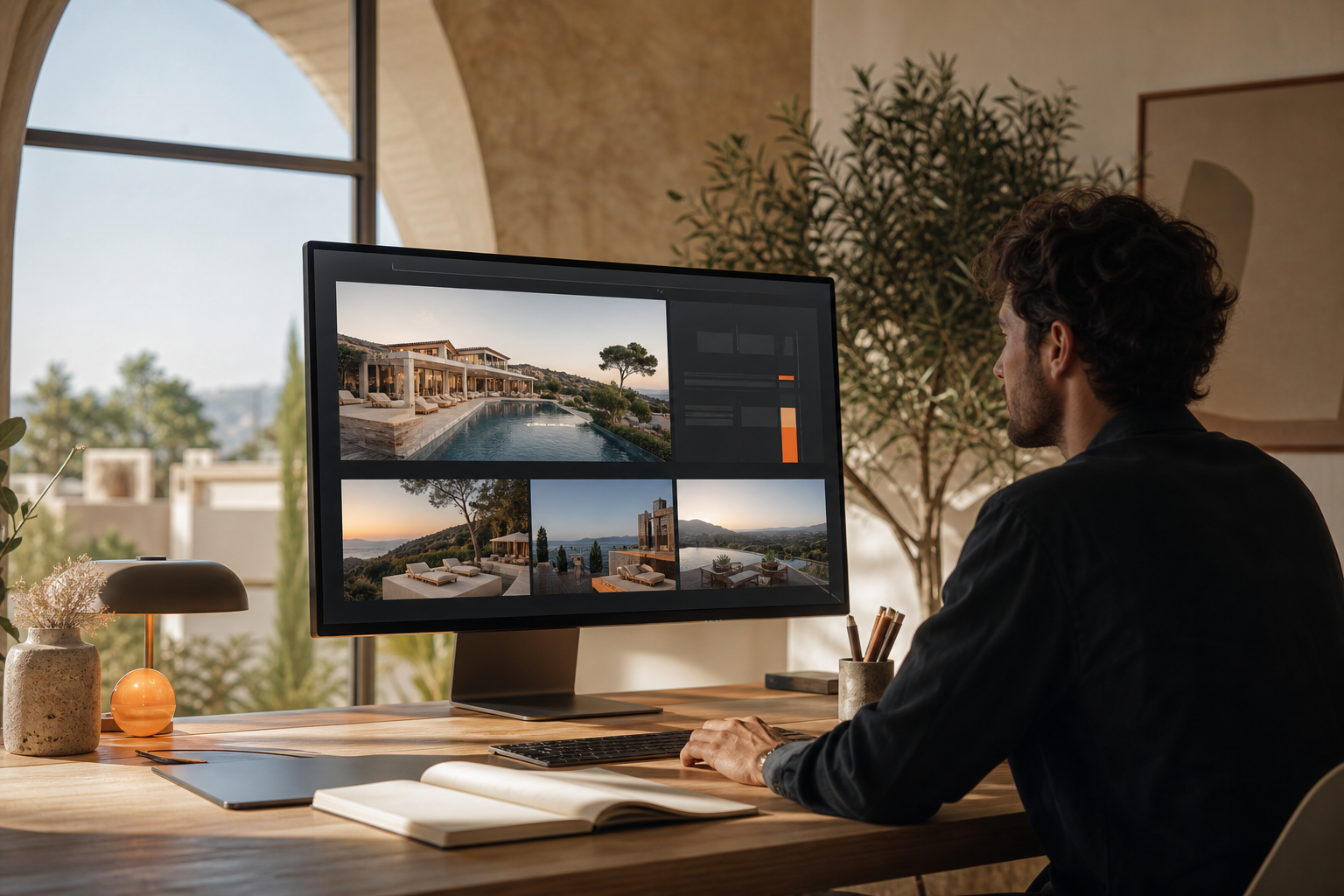
Luxury needs restraint. Use large images where they carry meaning. A villa hero should show the setting and mood. A fine dining page should show the room or dish with enough detail to support desire. Do not place motion behind every block. Motion has more force when it appears at the right moment.
For interactive scenes, we may use 3D graphics or controlled animation. The choice depends on the story. A yacht brand may benefit from a slow route animation. A property agency may need a calm image sequence that keeps the home in focus.
Test every visual idea against three questions:
- Does it show the offer faster?
- Can a visitor read the page on a small screen?
- Does it slow down the route to inquiry?
Keep buttons obvious. Give links enough space to tap. Let text sit on a solid background when an image harms contrast. People must be able to perceive, understand, handle, and interact with web content. That is a design test, not a legal afterthought.
Build a few page patterns instead of styling every page from scratch. A property detail page might use a hero, facts panel, gallery, location section, proof block, and inquiry form. Repeated patterns reduce errors and help visitors learn the site.
We like cinematic work. But we remove any effect that hides a fact or delays an action. Premium design should feel calm, clear, and intentional. If you want a focused example, see our luxury villa real estate web design service page for the kind of visual and conversion brief we build around.
Step 3: Design Responsive, Accessible, and Fast User Experiences
Modern website design has to work on the device a visitor has in hand. A beautiful desktop layout means little if the mobile version hides the key facts.
Design mobile first for the pages that drive leads. Put the main value statement near the top. Keep the first action visible without a long scroll. Check whether the form can be filled with one thumb. Then expand the layout for tablets and large screens.
Build a test matrix before launch:
- Small phone with a slow connection.
- Large phone in portrait and landscape.
- Tablet with touch input.
- Laptop with keyboard use.
- Wide screen with larger text settings.
Watch for layout shifts. A gallery that jumps while loading can make a visitor tap the wrong control. Reserve space for images. Set image dimensions. Compress files before upload and use the right format for the content.
Keep video short or load it after the first screen. A full-screen background film may look rich, but it can delay the first useful view. Give visitors a still image first when the connection is slow.
Accessibility checks should cover more than color. Use a sensible heading order. Add useful alternative text. Make the focus state clear. Ensure a visitor can reach the form with a keyboard. Do not rely on hover to reveal a key fact.
We also test with content in place. Placeholder text hides problems. A long villa name, a German heading, or a long legal note can break a layout that looked perfect in a mockup.
By now you should have responsive layouts, a performance test list, and an accessibility pass for every lead path. A site that looks premium but feels slow is still a poor sales tool.
Step 4: Structure the Site for SEO, Multilingual Search, and Discovery
Modern website design needs a search structure that people and crawlers can follow. A page cannot win attention if its words, links, and technical signals stay unclear.
Start with the site map. Give each service a useful page. A luxury real estate site may need pages for villas, buying help, areas, and the agency. A yacht company may need pages for charter types, routes, vessels, and inquiry support. Keep each page focused on one search need.
Write a clear title and opening paragraph for every key page. Use one H1 heading. Break long content with descriptive H2 headings. Link related pages with words that describe the destination. “Mallorca villa buying guide” tells more than “learn more.”
Technical SEO belongs in the first build. Check:
- Indexable page versions.
- Canonical URLs.
- XML sitemap access.
- Redirect rules for old pages.
- Image alt text and file names.
- Structured data where the content supports it.
Sites should avoid tactics designed to mislead search systems. We treat that as a useful build rule. Write for the buyer first, then make the page easy to read for search systems.
International sites need more care. Do not copy one English page into a translation tool and call the work done. Review terms for property, hospitality, and finance. Keep each language version natural. Use separate URLs for language variants, then connect them with the correct language signals.
Show currency, units, and contact expectations in a way that fits the visitor. A buyer from the United States may think in square feet. A visitor from Europe may expect square meters. Give both when the market calls for it, but keep the page easy to scan.
Umania Labs builds multilingual architecture into the planning stage rather than adding it after launch. That matters for Mallorca brands serving international buyers. The site needs one content model, clear language paths, and a handoff plan so new pages stay consistent.
The luxury design conversation often stops at visual style. Our review of eight agencies found that the public material for seven named studios focused on visual work without reporting AI lead capture, search support, or multilingual features. Umania Labs was the only entry in that sample with all four capability fields marked true: cinematic design, AI lead qualification, technical SEO, and multilingual support. The result is a useful buying question: what happens after the visitor is impressed?
Step 5: Add Lead Qualification, Test the Journey, and Launch
Modern website design becomes a sales system when the site can sort intent and move the right inquiry to the right person.
Keep the first form short. Ask for the details needed to judge fit. For a villa inquiry, that may include location interest, budget range, timing, and buyer type. For a yacht request, dates and guest count may matter more. Do not ask for ten fields because the CRM can store them.
An AI agent can ask follow-up questions in a natural exchange. It may clarify dates, party size, preferred area, or the kind of service a visitor needs. The agent should state what it can do. It should also hand off to a human when the question needs judgment, privacy care, or a bespoke answer.
Set a lead score with the sales team before launch. A high-intent inquiry may include a clear time frame and a service match. A low-intent inquiry may ask for general inspiration. Both have value, but they should not land in the same queue with the same urgency.

Test the full journey as a visitor:
- Open the page from a search result.
- Find the offer without hunting.
- Ask a question through the agent or form.
- Submit valid and invalid details.
- Check the confirmation message.
- Confirm the lead reaches the right inbox or system.
Run the same test in each language. Check date formats. Check currency fields. Check that a failed form explains the fix without deleting the visitor's work.
Use a staging site for final review. Test redirects from the old site. Check analytics events. Review cookie settings and consent copy with the right legal advice. Then launch when the team knows who owns each lead.
After launch, review the path each week. Look for forms that start but do not finish. Read unanswered questions. Compare lead quality by page and language. Change one part at a time so the team can see what helped.
Umania Labs combines cinematic front-end work with AI lead qualification and technical SEO because the handoff matters. If the website earns attention but the team cannot act on the inquiry, the build is unfinished. The right launch plan gives sales a clear queue and gives visitors a clear promise.
FAQ
What makes modern website design?
Modern website design combines current visual patterns with clear navigation, fast performance, accessible content, and a focused conversion path. Large images or animated type may support the look, but they do not define quality alone. A modern site helps visitors find the right information quickly, then gives them a simple next action.
How do I make a luxury website feel premium?
A luxury website feels premium when its choices are restrained and its details support trust. Use strong photography, careful type, clear spacing, and a small set of visual rules. Keep proof close to the offer. Remove effects that slow the page or hide key facts. Quiet confidence usually works better than constant motion.
Should a modern website use video?
Video can support modern website design when it shows mood, place, or product detail that still images cannot express. Keep the first screen usable without sound. Compress the file and avoid delaying the main content. A short film can help a hotel or yacht brand, but the inquiry path must remain clear beside it.
How important is SEO in website design?
SEO is part of website design because page structure affects how people discover and use the site. Plan page topics, headings, internal links, language versions, and technical settings before development ends. A visual site with thin copy or blocked pages may look impressive but can miss the buyers searching for its services.
Can AI qualify website leads?
AI can qualify website leads when the business gives it clear questions, rules, and handoff points. It can ask about timing, fit, and service needs before a team member replies. We still keep human review for complex or sensitive requests. The goal is a better first response, not a wall between the buyer and the business.
Conclusion
Build the site around the buyer's decision, then add visual drama with care. We recommend starting with a one-page audience and conversion brief before choosing a layout, animation, or platform. Umania Labs can help luxury brands turn that brief into a cinematic, multilingual website with search structure and lead qualification built into the journey. Begin by listing your top service, audience, and desired inquiry.