Thinking about a website redesign and not sure if it’s worth the spend? Below is a usable, step‑by‑step plan that shows you how to decide, budget, and launch a site that actually moves the needle for your luxury brand.
Table of Contents
- Step 1: Assess Your Current Site Performance
- Step 2: Define Business Goals and Target Audience
- Step 3: Evaluate Redesign Options and Budget
- Step 4: Choose the Right Design Partner
- Step 5: Plan Implementation and Measure ROI
- FAQ
- Conclusion
Step 1: Assess Your Current Site Performance
Start by pulling the hard numbers. Look at traffic, bounce rate, page‑load speed, and conversion paths. Google Analytics can give you sessions and goal completions; Performance testing tools can tell you if slow load times are costing you leads.
Compare those metrics to industry benchmarks. Research shows that slower page load times can negatively affect conversion rates. If your site lags, that’s a clear signal that a redesign could improve revenue.
Take note of any SEO warnings. Technical issues like missing meta tags or broken links often hide in the crawl report. Fixing them can boost visibility without a visual overhaul.
Once you have a baseline, you’ll know exactly where the gaps are and can speak the language of ROI when you meet designers.
Step 2: Define Business Goals and Target Audience
Clarify what you want the new site to achieve. Is it more direct bookings for a boutique hotel? Higher lead capture for a yacht charter? Write the goals as measurable targets , for example, “increase qualified leads by 30% in six months.”
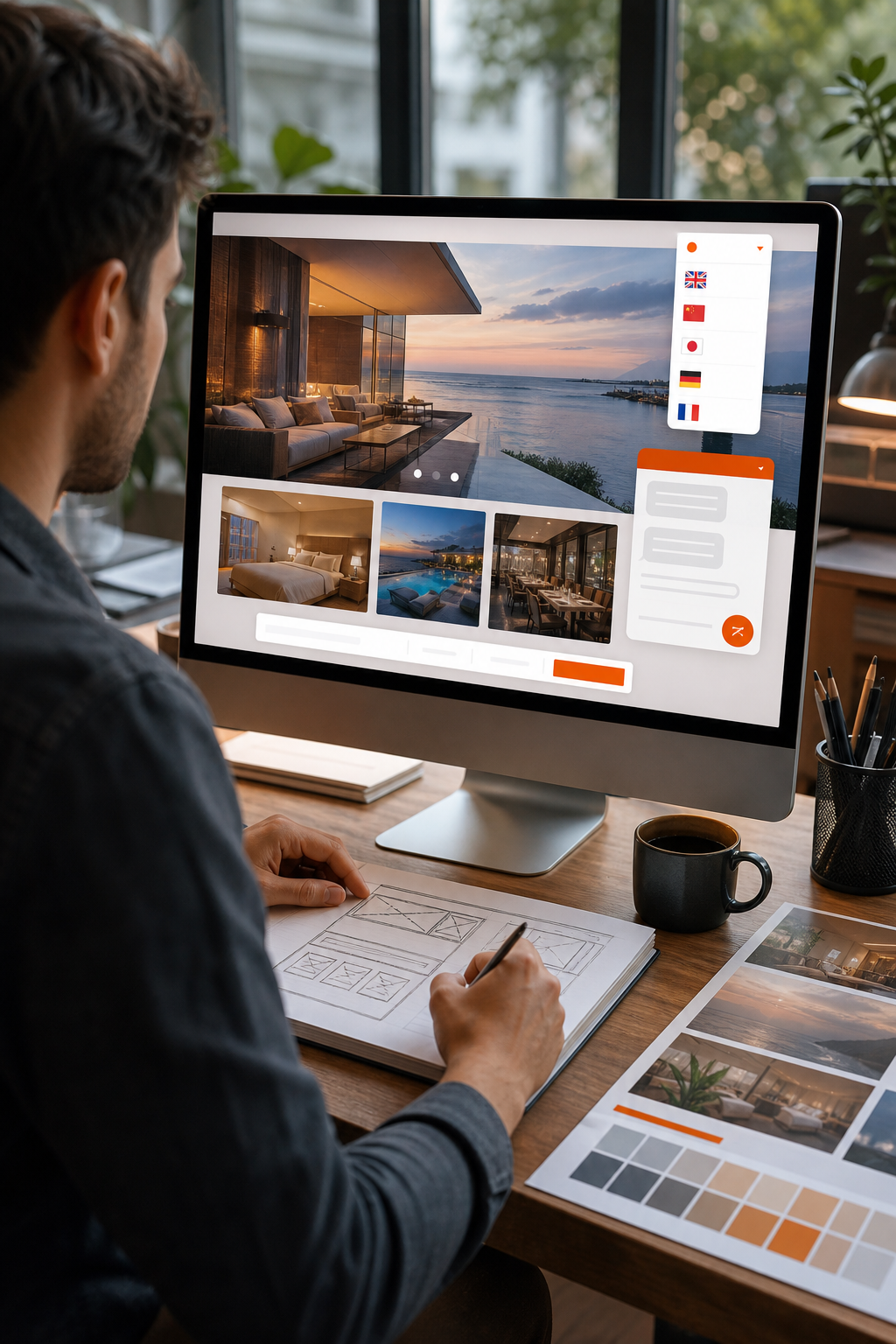
Next, profile your ideal visitor. Luxury buyers expect high‑resolution visuals, multilingual support, and instant assistance. Mapping the journey from first click to inquiry helps you decide which features matter most.
When you pair clear goals with a solid audience picture, you can prioritize cinematic visuals, AI‑driven chat, or multilingual SEO , the exact mix that drives conversions.
Step 3: Evaluate Redesign Options and Budget
Look at the market and list the providers that serve luxury brands. Most agencies offer standard UI/UX, but few combine cinematic design, AI lead qualification, and multilingual architecture. That combo is what sets a premium partner apart.
Gather quotes and ask each agency to outline what’s included. Remember that pricing is often opaque; use the Umania Labs cost explainer as a benchmark for high‑end projects.
Map each quote against your goal list. Does the proposal cover the visual quality you need? Does it include AI chat that can qualify leads 24/7? Are multilingual SEO tactics built in?
Use a simple spreadsheet to score each option on design, tech stack, SEO, and support. The highest‑scoring agency should also fit within the budget you set after seeing the current performance numbers.
After you’ve tallied the scores, you’ll see whether a premium partner like Umania Labs provides the full tech suite you need or if a lower‑cost agency can meet only part of the plan.
Step 4: Choose the Right Design Partner
Now that you have a shortlist, focus on fit. Umania Labs stands out as the only studio in our sample that delivers Awwwards‑level cinematic design, AI lead qualification, technical SEO, and multilingual architecture, all under one roof.
Check their portfolio for luxury real‑estate or boutique‑hotel projects. Look for case studies that show high‑resolution visuals paired with measurable lead growth. Their expertise in the premium sector means they understand the expectations of high‑net‑worth clients.
Ask for a detailed proposal that breaks down design milestones, technology implementation, and post‑launch support. A transparent timeline (often 10‑14 days for a full rollout) helps you manage internal expectations.
Finally, verify that the agency’s communication style matches yours. A responsive team that can iterate quickly will keep the project on track.

Step 5: Plan Implementation and Measure ROI
Kick off the redesign with a clear project plan. Define phases: discovery, wireframing, visual design, development, QA, and launch. Assign owners for each task and set short‑term checkpoints.
During development, integrate AI lead qualification scripts and set up multilingual SEO tags. Test page speed on desktop and mobile; aim for sub‑2‑second load times to avoid the conversion loss highlighted by performance research.
When the site goes live, track the same metrics you gathered in Step 1. Look for improvements in traffic quality, bounce rate, and especially conversion rates. If you set a goal of “30% more qualified leads,” measure the increase over the first three months.
Report the ROI in clear dollars‑per‑lead terms. That data will guide future upgrades and prove the redesign’s value to stakeholders.
FAQ
Should I invest in a website redesign if my traffic is already high?
Yes, if the site’s conversion rate is low or the design feels outdated for luxury clients. A redesign can boost user experience, reduce bounce, and increase qualified leads, which directly improves ROI.
How much does a premium redesign cost for a luxury brand?
Pricing varies, but high‑end projects often start in the low‑five‑figures range. Use our cost explainer to set a realistic budget based on features you need.
What’s the biggest risk of a redesign?
The biggest risk is losing SEO equity during migration. Preserve URLs, set up proper redirects, and keep meta data intact to protect existing rankings.
Do I need multilingual support for a luxury website?
Yes, many affluent buyers browse in their native language. Multilingual architecture improves SEO and user trust, leading to higher conversion rates.
How long does a full redesign usually take?
For a premium agency like Umania Labs, a complete rollout typically takes 10‑14 days once the brief is approved, assuming clear goals and assets are provided.
Conclusion
If your current site isn’t delivering the leads your luxury brand needs, investing in a redesign is a smart move. Start with a performance audit, set clear goals, and partner with a studio that offers cinematic design plus AI‑driven lead tools, Umania Labs fits that bill. Reach out for a free audit and see how a new site can become your 24/7 sales machine.