Your boutique hotel in Mallorca already has the views, the charm, and the local flavor. But without a website that turns browsers into bookers, you're leaving revenue on the table. Here's a step-by-step process to build a site that drives direct reservations and reflects your property's soul.
Table of Contents
- Step 1: Define Your Boutique Hotel's Brand Identity & Target Audience
- Step 2: Craft a Visual Narrative with Mallorca-Inspired Design
- Step 3: Optimize for Mobile, Speed & SEO from the Ground Up
- Step 4: Integrate Booking Engines, Reviews & Social Proof
- Step 5: Implement Multilingual & Multisite Architecture for International Guests
- Step 6: Plan Ongoing Content, Maintenance & Conversion Optimization
- FAQ
- Conclusion
Step 1: Define Your Boutique Hotel's Brand Identity & Target Audience
Before writing a line of code, get clear on who you are and who you're talking to. Your brand identity is the set of associations guests have when they hear your name , the Wikipedia definition of brand identity calls it "the visible elements of a brand." For a boutique hotel, that means your story, your architecture, your service style, and the emotional promise you make.
Start with your audience. Are you attracting Nordic honeymooners, German families, or American digital nomads? Each group has different expectations and different search behavior. Define their language, device usage, and price sensitivity. This foundation will guide every design choice, from color palette to booking flow.
Write down three core values your hotel embodies , serenity, authenticity, exclusivity , and let them drive your visual direction. If you're struggling, consider a strategic workshop with a team that specializes in this niche. Boutique Hotel & Agroturismo Web Design in Mallorca starts with that brand audit.
Step 2: Craft a Visual Narrative with Mallorca-Inspired Design
Your website should feel like a portal to your property. Use photography and video as the backbone. Invest in professional images that capture the Mediterranean light , the olive groves, the stone walls, the sea views. Design elements like color palettes (terracotta, white, deep blue) and typography (serif for elegance, sans-serif for readability) should echo the island's textures.
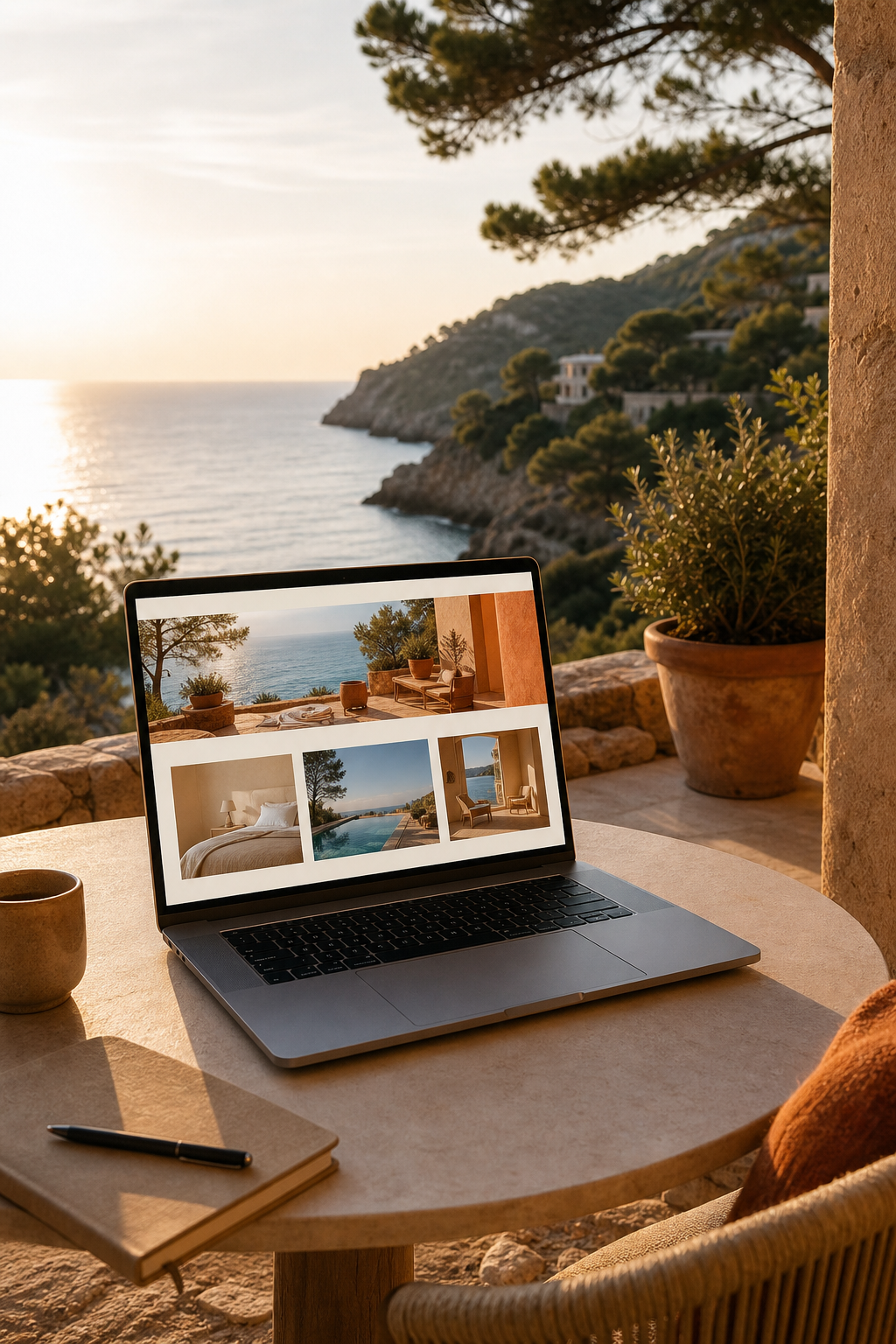
Consider motion effects like parallax scrolling or subtle animations that mimic the breeze. But keep performance in mind , every visual flourish must load fast. For an example of how a luxury accommodation translates its atmosphere into a digital experience, visit Villino Rubini on Lake Como, a property that uses its Art Nouveau heritage to create a cinematic online presence.
At Umania Labs, we build editorial sites that cinematically showcase your finca's authenticity, pairing high-res imagery with conversion-focused layouts. The goal is to make visitors feel the calm of your estate before they step through the gate.
Step 3: Optimize for Mobile, Speed & SEO from the Ground Up
Most travelers book on their phones. Your site must be responsive, fast, and SEO-optimized from day one. Google uses mobile-first indexing, meaning the mobile version is the primary version. Test your designs on real devices, not just emulators.
Speed matters even more. Compress images (WebP format), use lazy loading, and use CDNs. A one-second delay in page load can reduce conversions by 7%. For technical SEO, implement proper schema markup for hotels (Hotel type, offers, reviews) and optimize meta tags for local keywords like "boutique hotel Mallorca" and "direct booking."
Top Hotel Web Design Agencies for Luxury Brands often emphasize technical SEO as a differentiator. Make sure your agency can handle hreflang tags and international targeting from the start.
Step 4: Integrate Booking Engines, Reviews & Social Proof
A beautiful site that doesn't convert is a brochure. The booking engine is your cash register. Choose one that integrates directly with your property management system (PMS) to avoid double bookings and manual updates. Offer real-time availability, secure payments, and a frictionless checkout.
Social proof is equally powerful. Display recent guest reviews from Google and Tripadvisor, preferably as a live feed. Feature testimonials with real guest photos. Consider a "featured in" section if you've been covered by travel magazines.
Enhance the guest experience before they arrive , offer curated in-room amenities like a welcome fragrance from Essentia Perfume's fragrance gift guide as an upsell. Small touches like that build loyalty and increase average spend.
At Umania Labs, we build sites with integrated booking engines and AI lead qualification, so every click can become a booking. The booking flow should be visible above the fold on every page.
Step 5: Implement Multilingual & Multisite Architecture for International Guests
Your guests come from Germany, the UK, the Nordics, and beyond. They search in their own language. A proper multilingual setup uses subdirectories (e.g., /de/, /en/) and hreflang tags to tell Google which version to show. This avoids duplicate content and improves rankings in each market.
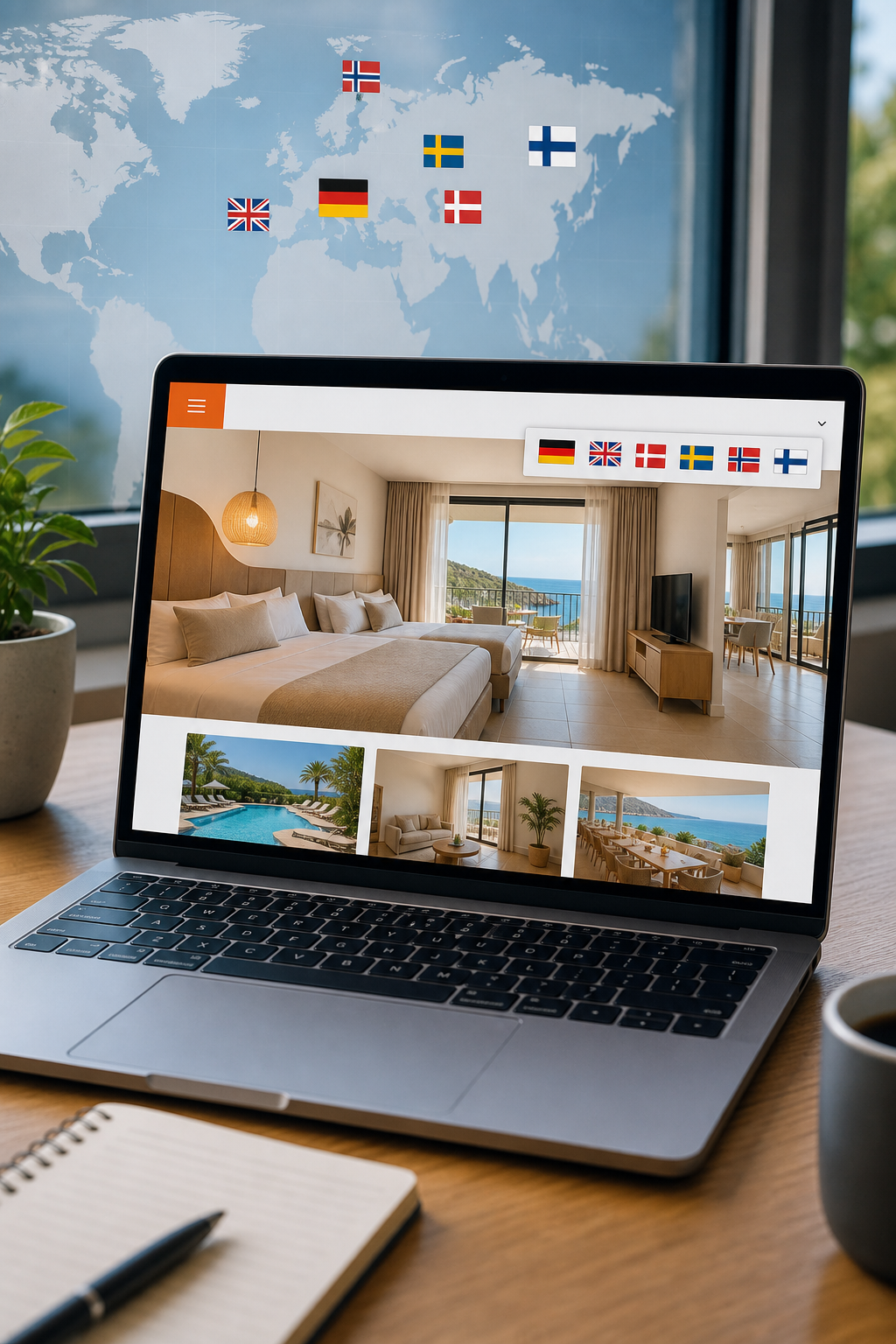
Multilingual SEO on Wikipedia explains the importance of separate content for each language , not just machine-translated. Each market needs its own keyword research, localized imagery, and currency/pricing.
For boutique hotels in Mallorca, a subdirectory structure like yourdomain.com/en/ and yourdomain.com/de/ works well. Use a language switcher in the header and make sure URLs are clean. Umania Labs builds multilingual sites with independent SEO per market, so your German page ranks for "Boutique Hotel Mallorca" separately.
Step 6: Plan Ongoing Content, Maintenance & Conversion Optimization
Launch is day one, not the finish line. Plan a content calendar with blog posts about local attractions, seasonal offers, and guest interviews. Fresh content signals to Google that your site is active. Also schedule regular maintenance: update plugins, check speed, refresh photography.
Conversion optimization is continuous. Run A/B tests on your booking button, hero image, and page layout. Track metrics like bounce rate, time on page, and booking funnel completion. Small tweaks , changing a button color from green to terracotta , can lift conversions significantly.
Budget 10-15% of your initial build cost each year for ongoing updates and SEO. If you work with an agency, review performance quarterly. Umania Labs offers maintenance packages that include performance monitoring, content updates, and conversion audits.
FAQ
How much does a website for a boutique hotel in Mallorca cost?
Costs vary widely. A basic template site may cost a few thousand euros, while a custom, multilingual, cinematic site with booking integration can start at €10,000 and go up. Expect to invest €10,000, €20,000 for a quality site that drives direct bookings.
How long does it take to build a boutique hotel website?
A typical project takes 6, 12 weeks from strategy to launch, depending on complexity. Planning and content creation take the longest. A good agency will deliver in phases, with a launch version ready in 4, 6 weeks.
Do I need a booking engine on my website?
Yes, if you want to reduce commission fees from OTAs. A direct booking engine pays for itself after a few reservations. Integrate it with your PMS for real-time availability.
Should my website be multilingual?
Absolutely. Most of your guests search in German, English, or Nordic languages. A multilingual site with hreflang tags helps you rank in each market and improves user experience.
How do I get more direct bookings?
Combine SEO, social proof, and a smooth booking flow. Offer a best-rate guarantee on your site. Use email capture to retarget visitors. And keep your site fast , speed correlates with conversion.
What is mobile-first indexing?
Google primarily uses the mobile version of your site for ranking and indexing. If your mobile site is slow or has poor navigation, it will hurt your rankings. Make mobile performance a priority.
Conclusion
Designing a website for your boutique hotel in Mallorca is about telling your story while making it easy to book. Start with your brand, build with visuals that transport, optimize for mobile and search, and never stop improving. If you want a partner who understands the Mallorca luxury market, consider Umania Labs for a site that works as hard as you do.